Climbing Mount Kenya Highest Peak (Batian) Ultimate Guide

Rising at 5,199 metres (17,057 feet), Batian is the highest Mount Kenya peaks. Batian is a true alpine objective, popular for its exposed steep rock faces, a high-altitude trekking and demanding trekking routes.

Unlike some lower, easier trekking peaks, Batian requires technical climbing ability, making it a serious climb for skilled mountaineers.

Unlike Kilimanjaro’s easy walk-up summit, Mount Kenya offers true alpine ascents — sharp granite spires, snow patches, and multi-pitch routes that compete with classic climbs in the Alps or Andes.

Highest peaks Batian (5,199 m) and Nelion (5,188 m) dominate the skyline, Mount Kenya attracts serious mountain climbers seeking adventure, skill development, and a trekking test of endurance.

The goal here is not only reaching the peak. Depending on the weather on the mountain, and seasonal ice conditions, you can summit Batian & Nelion peaks.

Climbing Mount Kenya Peak

Climbing Mount Kenya Packages

Explore the tours chosen and recommended by a multitude of travelers.

Mount Kenya Tours & Trips
5
Add to Wishlist
5
(1 Rating)
Climbing Mount Kenya Tour Via Burguret (Bamboo Route)
100 People
7 Days
Mount Kenya.
Safari Tours To Mount Kenya
5
Add to Wishlist
5
(1 Rating)
Mount Kenya Rock Climbing Batian Technical Challenge
100 People
6 Days
Mount Kenya.
Safari Packages To Mount Kenya
5
Add to Wishlist
5
(1 Rating)
Mount Kenya Trekking Tour
100 People
6 Days
Mount Kenya.
Mount Kenya Wildlife
5
Add to Wishlist
5
(1 Rating)
Mount Kenya Climbing 5 Nights Safari
100 People
5 Days
Mount Kenya.

Mount Kenya Batian Climb Highlights

This is not just a trekking adventure; it is a technical alpine objective that may require a concentration and mental calmness trekking to the peaks.

Climbing Difficulty and Grade – USA 5.6, British V.S, South African grade 16

Distance To the Summit – 39 km’s

Longest Trekking Time – 6-7 hours

Recommended Days – 8 days

Batian Total Climbing Time – 8-10 hours

Climbing Guide – climbers considering Batian should be solid 5.9 followers with experience on long technical routes of at least 10 pitches in length, with rock shoes useful for harder upper pitches.

Estimated Time to Descend Off Batian – 6-8 hours

Altitude At the Start – 2700 m (8,860 ft)

Altitude At Batian Summit – 5,199 m (17,057 ft)

Batian Route Is Best for: Experienced climbers, alpinists, confident scramblers with rope experience

Trekking Mount Kenya Batian Route

Mount Kenya is one of the most technically diverse rock-climbing destinations in Africa, and it best to take note of the following:

Batian requires a suitable weather window.

High-altitude experience above 4,500 m.

Multi-pitch climbing ability.

Rope management and self-rescue competency.

Physical fitness for 8–12-hour alpine days.

Batian is not a trekking summit. The difficulty is a combination of rock grade, altitude, exposure, route length, cold, weather, and descent complexity.

North Face Standard Route is the best route used to climb up Batian. The other side of the mountain is unclimbable at this season since it is completely covered with snow.

Although the rock is mostly solid granite, there are a few pitches with loose rocks.

Requires a guide with specific knowledge of the North Face approach.

The climb requires competent rope management.

Climbing up fissures and chimneys leads to the top of the tower, which is more difficult. Because this area is generally ice and snowy, it may be challenging.

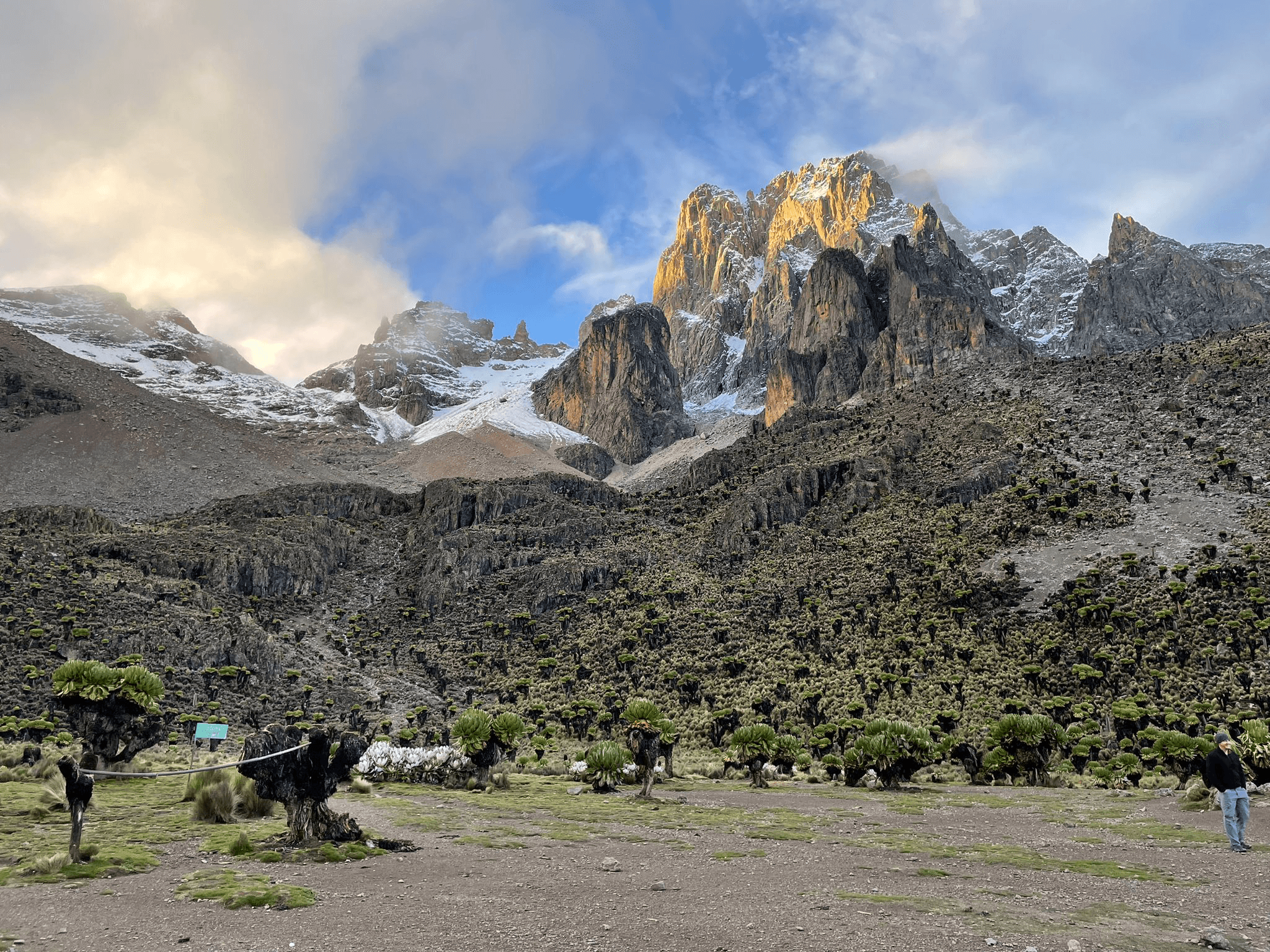
Mount Kenya Trekking Guide

Explore the lakes and tarns along the climbing routes

Main Batian Climbing Routes

1. North Face Standard Route

This route is the least difficult on the north side of Batian.

The North Face Standard Route is the classic Batian objective during the northern-hemisphere summer window. African Ascents gives the route difficulty as USA 5.6, British V.S, South African grade 16, with Batian’s summit at 5,199 m. It also describes a technical climb involving mostly class III scrambling with harder pitches, physically and mentally demanding because of altitude and duration.

The Batian climb is usually 16–21 pitches, depending on rope length, party confidence, group size, and conditions. It notes a range from low-grade scrambling to sections around UIAA IV+, with helmets essential because of loose rock, sandy scree, and alpine terrain.

2. South-East Face / Nelion and Batian Traverse

During the December–March season, climbers often focus on Nelion via the South-East Face, with possible continuation to Batian through the Gate of Mist if conditions, time, and ability allow. This is not simply a trekking extension; it is a technical alpine objective that may require a night on Nelion and a traverse between the peaks.

3. Batian–Nelion Traverse

The Batian–Nelion traverse is one of the most serious Mount Kenya objectives. It adds complexity, exposure, weather sensitivity, route-finding, and descent management. It is better suited to climbers who already understand long alpine days and multi-pitch technical terrain.

Batian Technical Skills & Considerations

As a climber trekking Batian, you should be comfortable with:

wearing and adjusting a harness

helmet use

tying into a rope

belaying

rappelling / abseiling

moving on exposed rock

scrambling while carrying a light summit pack

following guide instructions quickly

climbing in boots or approach shoes

using rock shoes where the guide recommends

maintaining focus during a long descent

Climbing Batian Safety Tips

You need climbing guide.

Use the right route for the season.

Carry insurance that covers technical climbing to 5,199 m.

Do not hide altitude symptoms (talk to your guide).

Confirm what technical gear is provided.

Practice rope systems before arrival.

Avoid trying Batian immediately after landing in Kenya.

Respect guide decisions if weather or safety conditions are poor.

Batian Route Climbing Itinerary

Attempting the summit Mount Kenya via Batian Route can be done in 8-9 days hiking.

Using the North side of Batian, start from Kami Hut, where a 40-minute walk below the foot of the North Ridge is made to the starting gully, which is marked by a cross in a circle chipped on rock. Alternatively approach from Shipton’s Hut, 50 minutes. Climb straight up from the marker and move right at 6 m into the gully. Continue over easier rock until it’s possible to scram­ble for 90 m up the gully to a steep wall. An obvious crack brings one onto a large terrace beneath a third steep wall, climb 6 m up an easy gully on the left, traverse back into the centre, then straight up and scramble into the Amphitheatre.

Scramble about 120 m across this until it steep­ens, in the direction of Firmin’s Tower, which is at the top left- hand corner. Climb 25 m to a wide sloping ledge, then tra­verse right along the ledge for 20 m, until it is possible to gain the ridge on the left-hand skyline. A 9 m scramble brings one to the foot of Firmin’s Tower. Climb the crack for 20 m to where it breaks into two branches. Chimney up the right-hand one for 15 m to the top of a massive loose block (overlooking the Amphitheatre).

Move left into the original chimney and continue up for 9 m. Scramble for about 18 m and up to the toD of the Tower – Descend to the ridge and scramble along it for 60 m until it steepens. Continue along the ridge for another 30 m. Move up to an obvious ledge then traverse right to a small Amphitheatre. Further scrambling brings one to the junction of the West ridge where there is a superb bivouac site. Whilst it is possible to climb along the ridge it is easier and safer to traverse horizontally from the bivouac site for about 120 m to Shipton’s Notch. The rock in this area should be treated with care. This route is suitable for descent. As of August 2025, all abseils on the descent have been equipped with bolts and a ring or maillon lower off.

Best Time To Climb Batian Peak

Batian route climb is seasonal.

The mountain sits near the equator, but the faces receive different sun and weather exposure depending on the season.

June–August: climb via Batian North Face, consider this the best Batian climbing window

September–early October: the is still possible

December–March: Nelion / South-East Face, with possible Batian traverse

April–May: generally poor, long rains, wet rock, poor visibility

October–November: often poor / abrupt short rains and weather instability

Challenges Climbing Batian Peak

Technical Climbing: Batian requires rope work, belaying, scrambling and descending on rope

Altitude: climbing above 5,000 m is slower and more tiring

Exposure: some sections are mentally demanding

Route Length: summit day can be 11 hours to 13+ hours

Weather Changes: mist, rain, snow and cold rock can stop the climb

Descent: descent requires concentration after fatigue

Route-Finding: upper sections can be complex in poor visibility

Remoteness: rescue options are limited compared with developed alpine areas.

Requirements To Climb Batian Peak

Certified trekking guide

Experienced technical climbing guide

Porters And Cook

Group camping equipment

Treated or purified drinking water

Climbing ropes and group protection

Summit-day technical support

Emergency planning and descent coordination

Batian Technical Climbing Gears

Climbing ropes and harness.

Helmet.

Rock shoes.

Belay or rappel plate.

Karabiners.

Slings.

Prussic loops.

Nuts or wires.

Cams.

Quickdraws or extenders.

B1 boots, crampons and an ice axe may be required for snow or ice conditions.

High altitude gears.

Is A Guide Required to Climb Batian?

Yes! Batian climb requires you to have a specialist technical climbing support because of the rock climbing, exposure, route-finding and descent. All Mount Kenya visitors should enter with a qualified guide.

Can Beginners Climb Batian?

No! Batian is not suitable for ordinary beginners. A very fit beginner with climbing instruction may prepare toward it, but the standard Batian client should already have rock-climbing or alpine experience.

How Many Days Do You Need to Climb Batian?

To better climb Batian, you need 8 or 9 days if the client wants more acclimatization and a stronger weather buffer.

Do I Need Insurance?

Yes! You need a travel insuarance to climb Batian Peak, and the insurance should cover technical guided climbing with ropes up to 5,199 metres, search and rescue, evacuation, and helicopter evacuation where available.

Batian Preparation Tips

Physical Conditioning: Engage in a combination of trekking, climbing, and cardiovascular exercises. This will build endurance and help your body adapt to the exertion and altitude.

Altitude Acclimatization: Spend time at higher elevations prior to the climb to reduce the risk of altitude sickness.

Technical Skills: Practice scrambling and climbing on similar terrain to gain confidence and improve technique.

Gear Familiarity: Use the gear you plan to take on the climb during training to ensure comfort and efficiency.

Batian Preparation Tips

Here at Climbing Mount Kenya, we offer private guided climbs to Batian Peak, the main summit of Mount Kenya. We provide a technically qualified and experienced guide but the route is committing and long and participants would need to be familiar with leading long runouts, long abseils/rappels and putting in safe protection.

Tour
Search