Climbing Mount Kenya: A Complete Guide
Climbing Mount Kenya from the non-technical trekking summit of Point Lenana to the vertical granite spires of Batian and Nelion, offers both accessibility and challenge in a single mountain.
Forget the wildlife safaris, imagine standing atop on the roof of Kenya, gazing down thousands of feet above sea level. Needless to say, Mount Kenya climbing remains on many people’s bucket lists when visiting Africa, and offers easy and challenging ascents with superb scenic beauty.
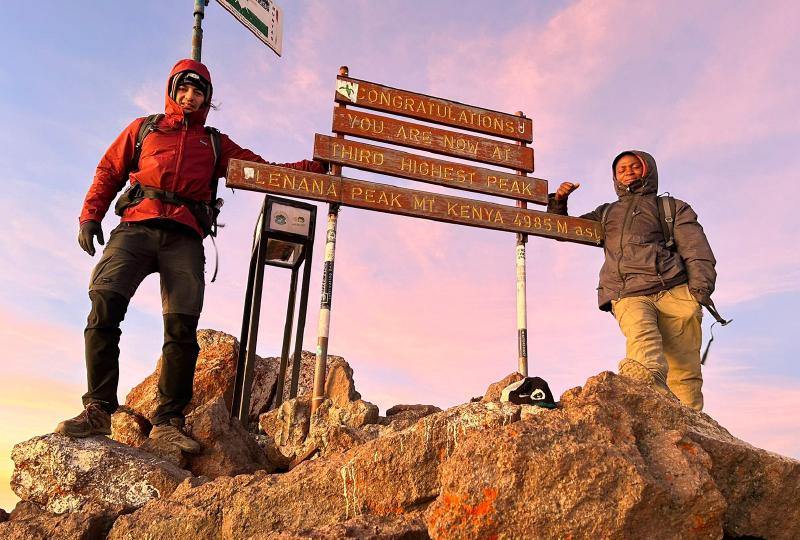
Mount Kenya is considered a more scenic trek and rises just at a height of 5,199 metres (17,057 feet) – the (2Nd) second highest mountain in Africa. The mountain range comprises three main peaks: Batian, Nelion and Point Lenana. The highest Mount Kenya peaks are Batian (5,199 metres) and Nelion (5,188 metres). Batian and Nelion require advanced rock climbing and mountaineering skills to conquer. It’s about 4,985 metres (16,355 feet) to Point Lenana’s summit the third highest point in Mount Kenya, which can be reached by walking. This comprehensive guide covers everything you need to know about climbing Mount Kenya, from the best routes to the summit, what to pack on this trekking adventure and preparations before you climb Mount Kenya.
Best Routes Leading Up Mount Kenya Peaks
There are six main access routes for climbing Mount Kenya peaks — Naro Moru, Sirimon, Chogoria, Burguret, Timau, and Kamweti — each route offering a distinct blend of scenery, difficulty, and adventure experience.
Climbing Route 1 – Sirimon Route
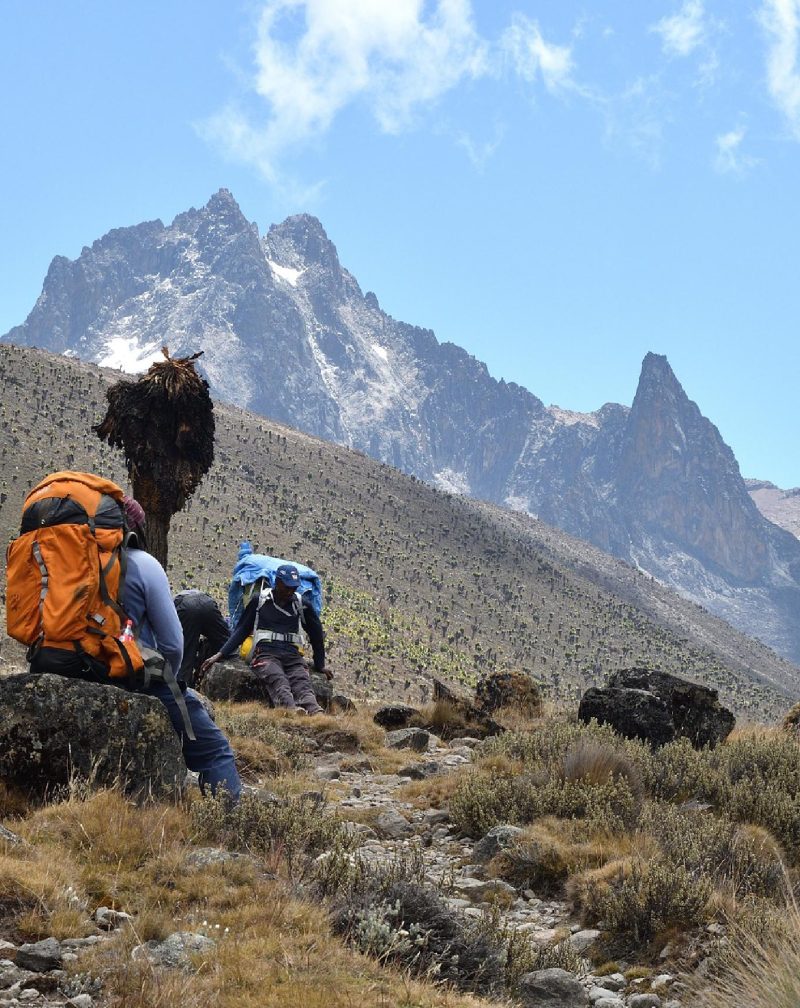
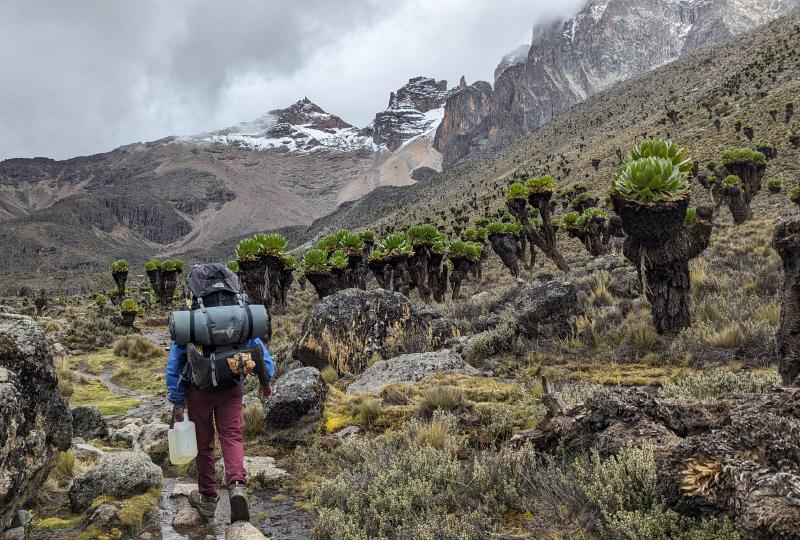
Sirimon Route is a 25km (round-trip) north-west ascent that takes four days to hike. It is considered the easiest trail, with gradual climbs and a few steep sections passing through classic Mount Kenya landscapes dotted with giant Lobelia and Groundsel.
Climbing Route 2 – Naro Moru Route
Trekking via Naro Moru route is a 20km southwest ascent that takes four days. It is a popular and stunning trail ideal for adventure seekers because it is the most challenging route, with the Via Ferrata on the final section towards the summit.
Climbing Route 3 – Chogoria Route
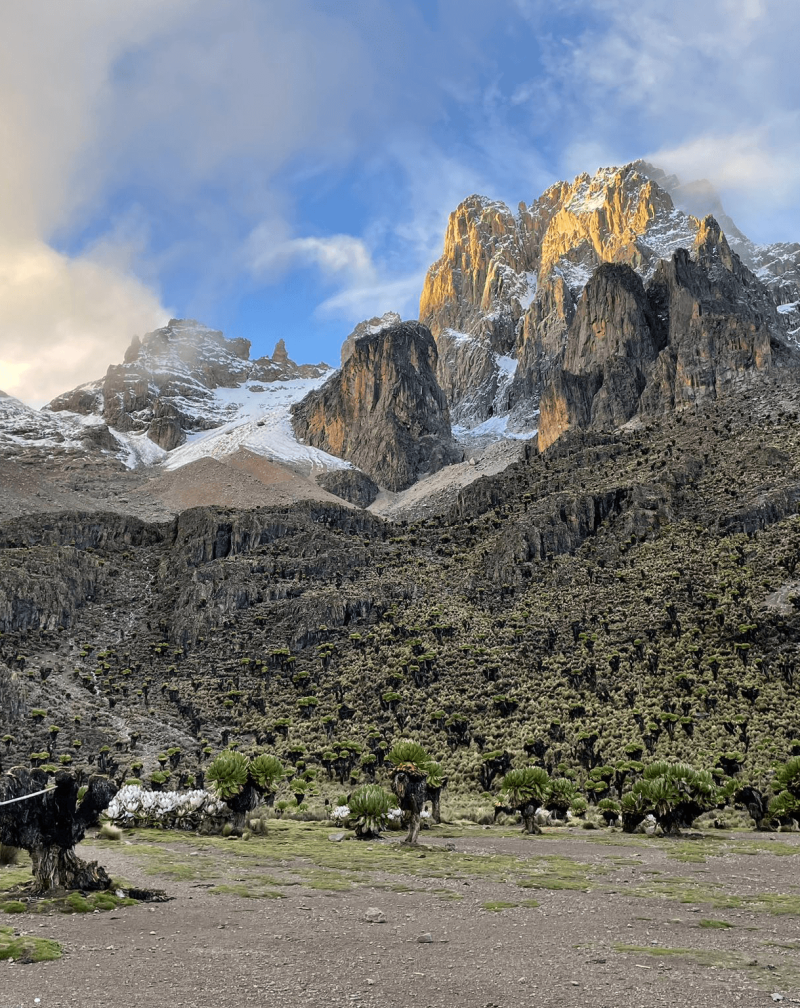
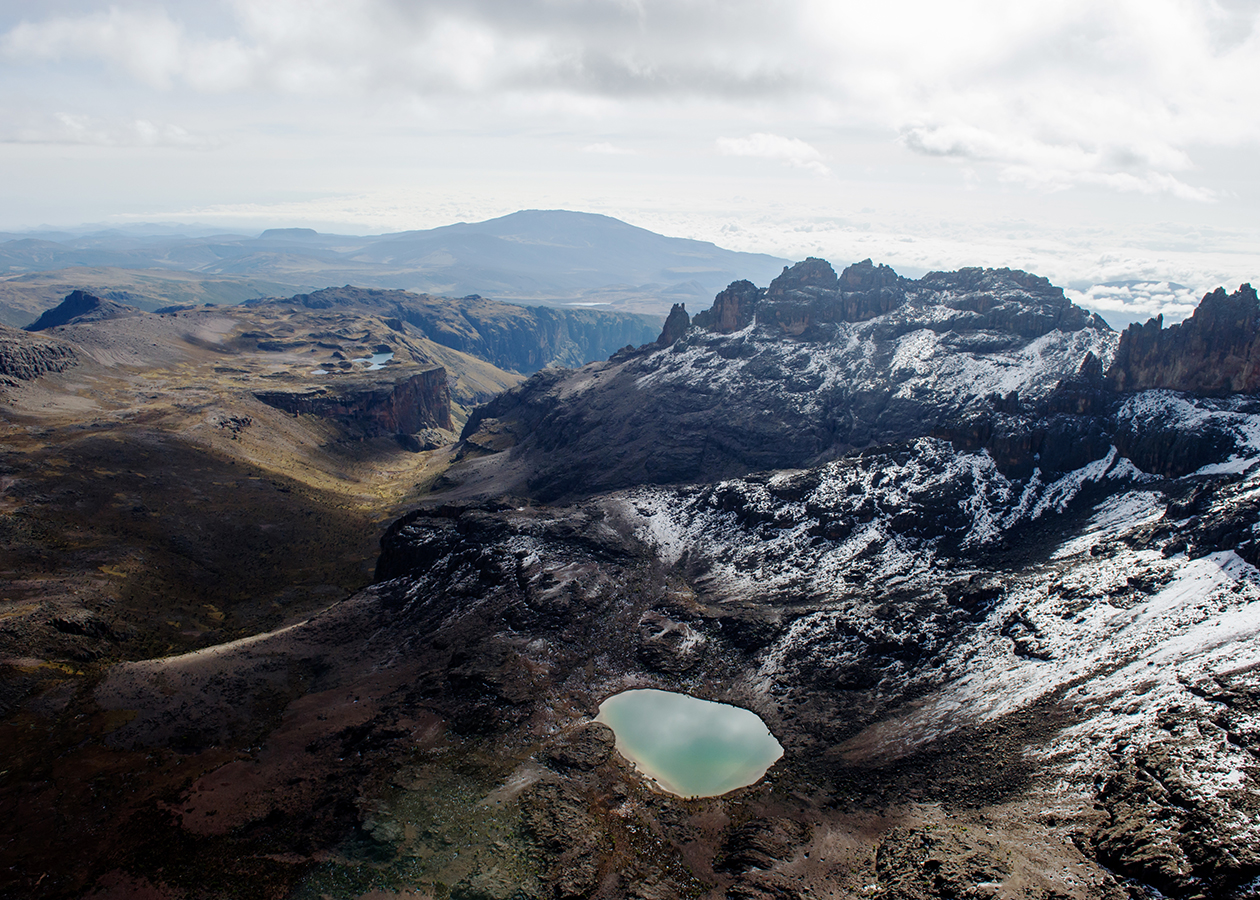
Climbing Mount Kenya via Chogoria Route is a 30km east ascent that takes five – six days with a much better acclimatization. Although it is the longest trail, it is arguably the most beautiful, offering spectacular views of natural amphitheatres, stunning lakes, and a waterfall.
Climbing Route 4 – Burguret Route
Hiking via the Burgeret Route approaches Mount Kenya on the Western side via Nanyuki Town. Burgeret route is about 76 kilometres and is it’s a much quieter route compared to the busy Northern slopes. The route starts of in the forest zone above the Gathiuru forest station, a station still used by the forestry department. This route takes you through a few afro alpine zone a dense forest made up of Giant bamboo, Ceders, Yellow wood and East African Rose wood, which you will see as you start to leave the forest, as you enter the Heather and Mooreland zone.
Climbing Route 5 – Timau Route
Trekking on the Timau Route approaches Mount Kenya from the North and follows a meandering route through the gentler northern slopes until they steepen at around 4200m. Timau route is a drier trek due to low rainfall in this side of the mountain. The peaks on Mount Kenya line up from east to west, meaning the views from the north give the impression you are entering an entire mountain range.
Climbing Route 6 – Kamweti Route
Trekking Mount Kenya via Kamweti Route is the least-visited of the mountain’s established approaches, beginning at Kamweti Gate on the southern slopes in Kirinyaga. Kamweti Route runs south to north, and is often marked by a rough underfoot, dense forests, mud after rains, no huts and a forest trail used more by animals than humans. This long, forested route threads through undisturbed montane forest — one of the most pristine on the mountain’s southern aspect — before ascending to the Afroalpine moorland and connecting with the summit circuit. Kamweti route requires a special entry permit by the National Park Authority, full camping equipment, and a highly experienced local guide. It is not suitable for first-time trekkers.
“The best view comes after the hardest climb.”
said Jimmy Jimmy, Mountaineering Specialist.
Best Time To Climb Mount Kenya
These are the best times to climbing Mount Kenya, month by Month.
The best Mount Kenya climbing windows are January–March when the weather is warm, dry, minimal snow on rock routes, and July–October when it is cold, clear, excellent visibility, and moderate wind.
Less favorable climbing periods are April–June when the long rains arrive making the climb slippery, with leech-prone forest trails and October–December which brings the short rains with unpredictable weather and mist.
Best Preparations To Climb Mount Kenya
We recommend that in the months leading up to your Mount Kenya climb you increase your physical fitness with aerobic exercise. Walking, running and stair-climbing will all strengthen your legs and improve your stamina
Go On Longer Walks – as you go about your day, if you have a dog, try put on a daypack with you during the daily walk
Hike the hills or try the gym on lightweight exercises
Rest & Recovery – ensure you give your body enough time to rest after long tasks at home. Resting and limiting exertion are also helpful. Try to make it as easy as possible for your body to adjust.
Endurance Training – shift in between high and low -Intensity training
Strength Training – work on your lower body (leg) strength – squats, lunges, anything that targets the large muscles in your legs. Build some balance to help with the uneven mountain terrains. Use hiking poles.
Yoga – ensure you implement stretching & flexibility in your training
Breathing Techniques – learning to control your breathing is very important when you hike in the thin air. Shallow breathing and hyperventilation don’t allow you to take in enough oxygen and can increase your body’s stress response. Be mindful of your breathing and learn to take long, slow, deep breaths.
Drink Water – Always stay hydrated, and eat regularly
Avoid Alcohol During Trekking – respiratory depressants such as alcohol and opiates should not be used to aid sleep at high altitude. Alcohol can make some of the symptoms of altitude sickness worse.
If a regular caffeine user, continue using to avoid a withdrawal headache that could be confused with an altitude headache
If you use tobacco products, you should quit before going to high altitudes – Tobacco use of any kind can affect oxygen levels, which is a key concern with altitude sickness. If you use tobacco products, stop – don’t use it when climbing mountains.
Mental Stamina and Readiness – stay confident, but not over-confident. Achieving milestones that you set for yourself can increase your confidence in your ability to handle tough situations. Over-confidence can cause laziness and complacency. Be informed as much as you can about the challenge you are undertaking, build up knowledge about the mountain as well as about yourself.
Food & Nutrition – eat well. On the mountain, we provide you with well-balanced nutritionally dense meals and cater for most dietary requirements. During your training, it’s important to follow a healthy nutritional plan for optimal results that aligns with your goals.
What To Expect On A Mount Kenya Trek
For your climbing camp staff, their day begins well before the sunrise. The team prepares hot water for your washbasin, tea, and other hot beverages and breakfast. Your day will start bright and early, with a friendly wake-up call as the sun glances over the horizon.
A team member will bring you a basin of warm water to wash your face and brush your teeth, and a hot beverage, to warm you up before breakfast.
You’ll need to re-pack your duffel bag and daypack, taking only what you’ll need for the day’s hiking. Roll up your sleeping bag, (make sure you’ve packed any loose bits and pieces) before you leave your tent, dressed and ready for the day’s trek.
Hot breakfast is served in the tent, and we’ll all gather close-by for the day’s briefing, followed by a hearty breakfast, and daily medical checks. Take this opportunity to refill your water bottles or hydration reservoirs.
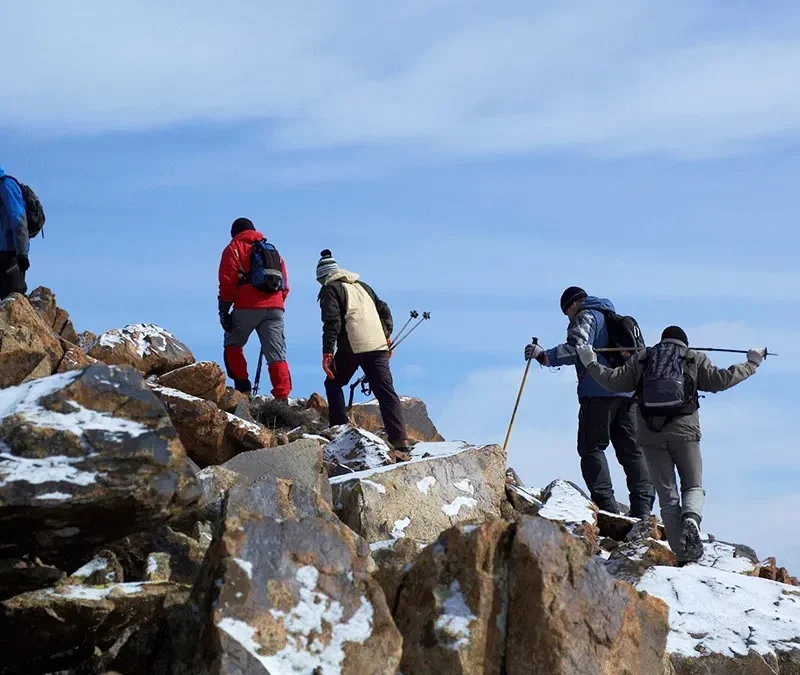
Once everyone’s pronounced fit and healthy, we’ll hit the trail, usually at around 8 am. Trekking poles in hand, we’ll be hiking at a slow-to-moderate pace, with plenty of rest stops for you to catch your breath, eat a snack, and appreciate the dramatic scenery of this unique mountain.
The team will stay behind to break camp, and will most likely overtake you during the course of the morning, moving quickly to set-up our next camp.
Your climbing guides will hike with you, making sure the group stays together, giving frequent reminders of the Kenyan saying “pole pole” (slowly, slowly). Keeping the pace slow and gradual helps with acclimatization and prevents anyone from getting unnecessarily fatigued.
Be sure to let your guide know if you have a headache, nausea, disorientation, or any other unusual symptoms.
We’ll stop for lunch along the way, some days this will be a hot lunch served in our tents; on other days we’ll have a picnic lunch, depending on the weather conditions, route or schedule. We aim to do most of the hiking in the morning so that after lunch it’s a shorter trek to our campsite.
On arrival at camp, you’ll find your tent ready for you, and your duffel bag inside. It’s important to change out of any damp clothing (whether from rain or perspiration), roll out your sleeping bag so it has a chance to “fluff up” (a compressed sleeping bag doesn’t insulate well), before heading over to the mess tent for a tea time snack and hot beverage.
Some afternoons we’ll do an acclimatization hike, up to a higher elevation, as part of the “hike high, sleep low” protocol, others we’ll rest and relax in preparation for the following day.
An early dinner will be served, after another medical check and briefing. Most trekkers crawl into their sleeping bag for an early night, others prefer to stay up talking. The mess tent is comfortable and well-lit, a good place to catch up on your diary or a bit of reading.
Accommodation On Mount Kenya
While it is expected for all trekking expeditions to be spent camping and sleeping in outdoor tents, Mount Kenya offers one of the most diverse accommodation layouts of any African mountains — from mountain cabins and huts to open-air campsites perched beneath glaciers.
Each mountain hut or campsites in Mount Kenya serves a different purpose: rest and acclimatization, base operations for summit attempts, or refuge for mountain researchers and porters. During a Mount Kenya climb, you can sleep inside mountain huts or sleep in tented campsites.
Safety Tips Climbing Mount Kenya Summit
Hydration is key in acclimatizing well, you should carry 2 liters of water with you each day with the aim of drinking all of this during your day’s hike. Drinking plenty of fluid at breakfast and evening meals is also important. You will understand why we suggest a “pee bottle” as a “must have” piece of kit to save you having to de-tent during the night and do a toilet visit when it’s cold and pitch black outside!
Fitness – be as physically fit as you can before you start to ensure you enjoy the climb rather than it being a hard slog. Also, the fitter you are the less likely you are to put your body under pressure and stress.
Make sure you have the right Mount Kenya gear and that you have tried and tested it before the trek to ensure that it works and functions and that you are as comfortable and confident as you can be. Don’t leave it till summit day to find out whether your head torch works or day one of the trek to try out your new walking boots.
Professional Guides For Climbing Mount Kenya
Our professional Mount Kenya climbing guide combines route knowledge, altitude judgment, medical awareness, climber pacing, clear communication and calm leadership. Your mountain guide should know when to continue, when to slow down and when a safe descent is the right decision.
Managing Altitude
A great Mount Kenya climb guide monitors how you are adapting to altitude, including symptoms, hydration, sleep, appetite, pulse and oxygen saturation.
Setting The Right Trekking Pace
The climb is purposefully slow. Consistent pacing conserves energy and gives your body time to acclimatise over several days.
Leading Summit Nights
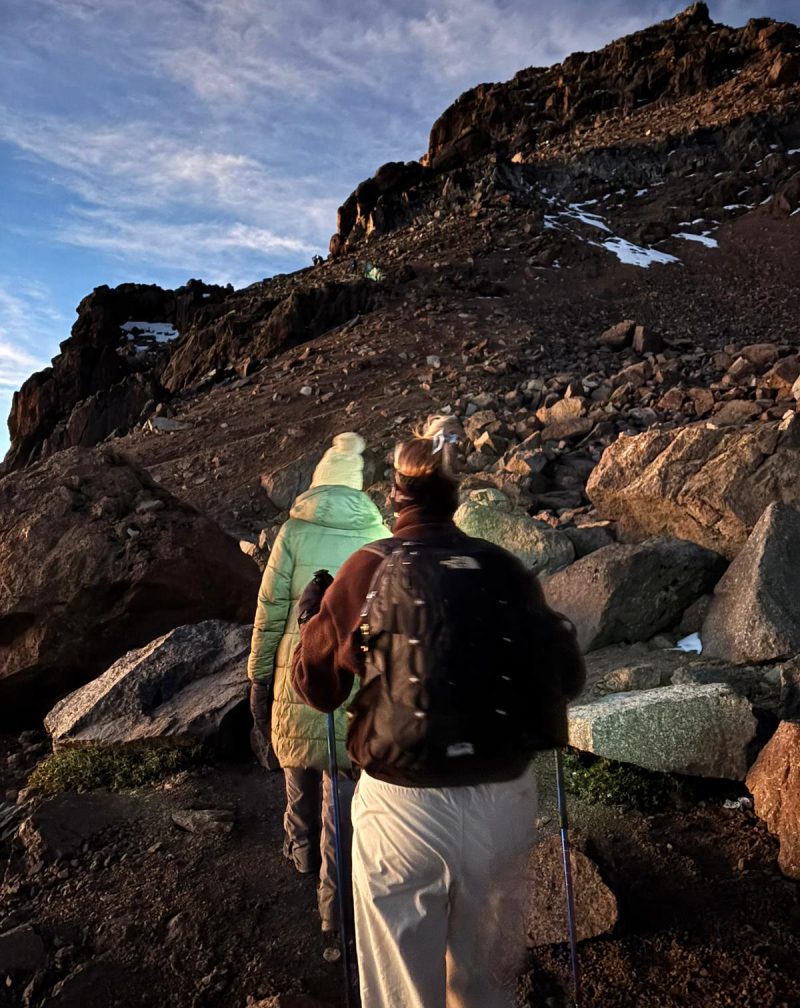
Summit night starts around midnight on many hiking routes. Your guide should easily manage layers, planned breaks, hydration, morale and the long descent after Lenana Peak or Batian Peak.
Make Safety Decisions/ Safety Calls
Experienced guides do not chase a summit success statistic at the expense of your health. Worsening altitude symptoms require immediate assessment and, when needed, descent.
An All-Inclusive Climbing Mount Kenya Package
Included For Your Comfort When Climbing Mount Kenya
- Mandatory briefing before the trek
- Return transfers between the hotel to the start / finish point of a climb
- Certified, English-speaking licensed trekking guide for the full days on the mountain
- Experienced mountain chef, freshly prepared meals during the climb
- Porter services to carry both equipment and supplies with a limit of up to 10kg personal luggage
- All camping equipment, spacious mountain tents and sleeping mats
- Your tent is set up with your personal pack inside
- All meals throughout the trek, catering to all dietary requirements (vegetarian, vegan, gluten-free)
- Treated drinking water throughout the trek
- Mount Kenya National Park entrance fees for the full days
- Park camping fees within the national park
- Comprehensive first aid kit carried by the guide including emergency medication.
- Storage facilities for excess luggage during hikes
- All government taxes & levies
Meal Plan & Food For Climbing Mt. Kenya
Your group leader will endeavour to cater for specific dietary requirements where possible, and vegetarianism and gluten intolerance will be catered for in most instances. Please notify your group leader of any dietary requirements in your group meeting at the start of the trip.
For those suffering from particular food allergies, your group leader will endeavour to disclose to their fullest knowledge the main ingredients in dishes being consumed. It is, however, your personal responsibility to ensure that you do not ingest any foods to which you are allergic. Alcoholic or non-alcoholic beverages are not part of included meals.
Do I Need A Guide To Climb Mount Kenya?
As one of the park rules, everyone must climb Mount Kenya with a licensed guide, porter(s) and a cook, and for good reason: guides manage navigation, pacing, and altitude safety, read the weather, and know exactly which camp to push for when conditions turn. The Kenya Wildlife Park Authority recommends visitors trekking Mount Kenya to enter the park with a certified guide.
Our mountain guides are not only with you for safety, but because our mountain crew knows the terrain and will help you pace well till we get you to Point Lenana in far better shape than a rushed, generic itinerary ever could.
Mount Kenya Climbing Tours
For many visitors to Africa, climbing Mount Kenya experience is a once-in-a-lifetime challenge. The climb takes in muddy rainforests, unique high-altitude plants and alpine meadows before finally arriving at the glacier-coated summit. Standing tall above the savannahs of East Africa, Mt. Kenya (5,199m/17,060ft) is an icon of Africa. But just how do you go about these guided climbing Mount Kenya treks and how fit do you have to be? We answer some of these common questions as you book your Climbing Mount Kenya trekking package today – journey with us to the roof of Kenya.