Mount Kenya Trekking Tours
Join our daily Mount Kenya climbing tours, and summit the second highest mountain in Africa. Rising majestically from the central heart of Kenya, Mount Kenya is one of Africa’s high-altitude trekking and climbing destinations. Towering at 5,199 metres (17,057 ft), Mt. Kenya is the 2Nd -highest mountain in Africa and attracts climbers and trekkers from around the world seeking to summit its dramatic volcanic peaks.
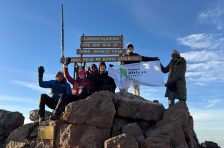
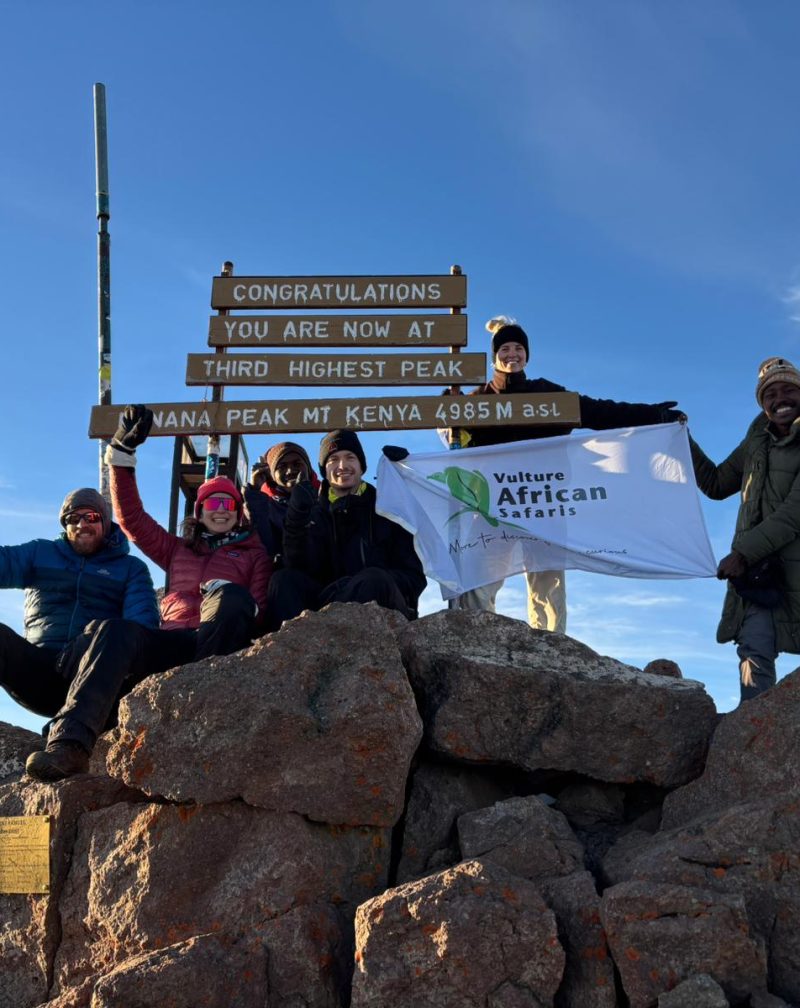
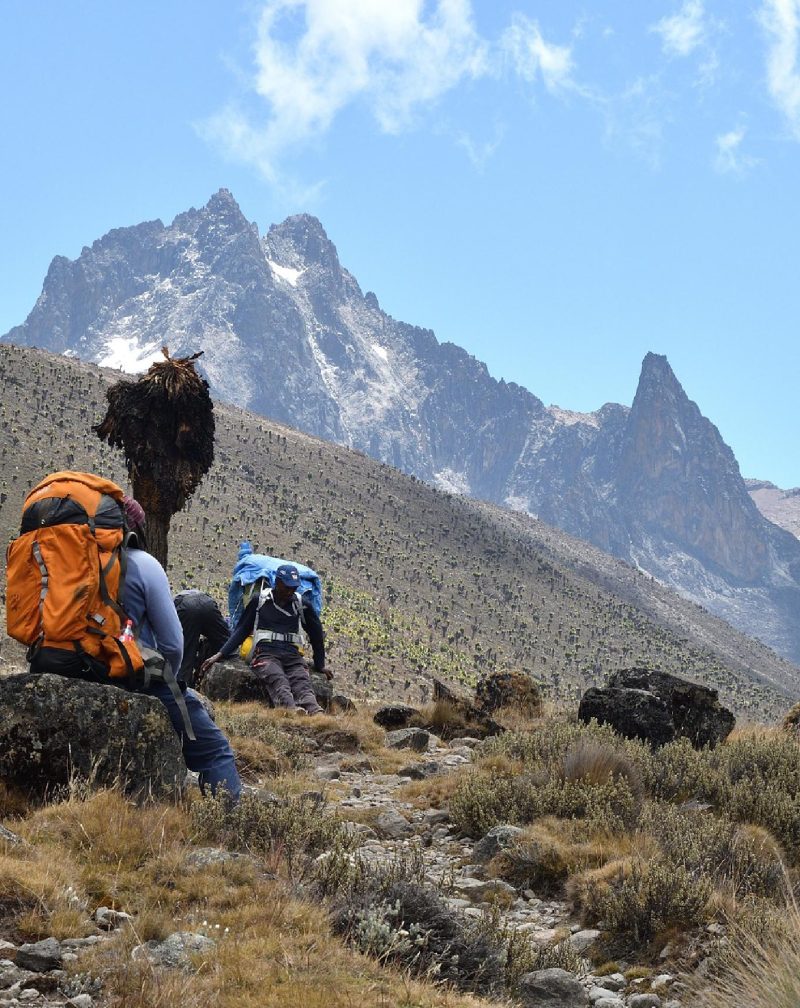
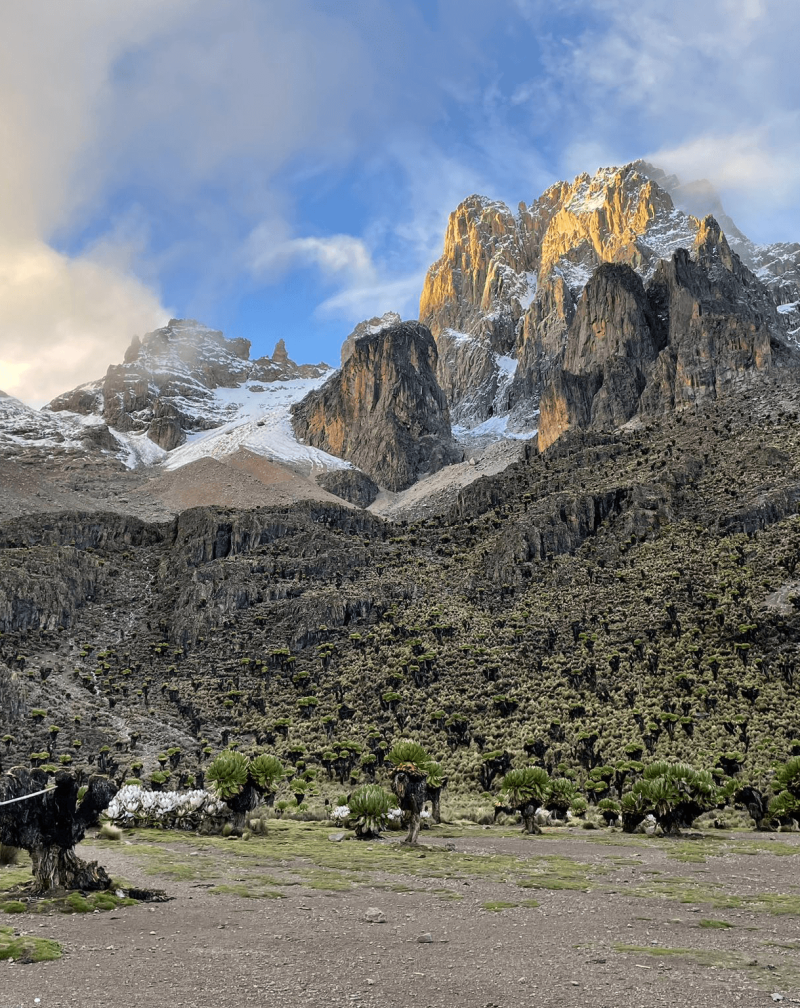
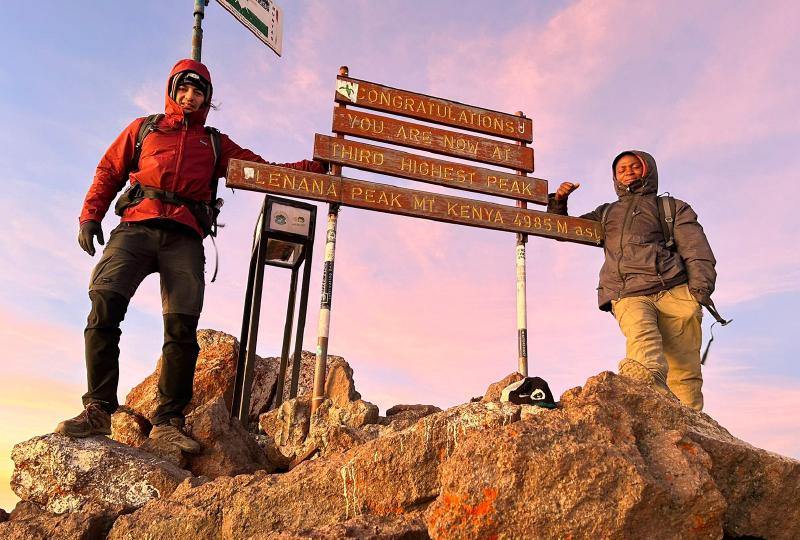
This mountain lies within Mount Kenya National Park and is a protected alpine wilderness that surrounds the massif. The highest summit on Mount Kenya, Batian, rises to 5,199 metres, while Nelion at 5,188 metres just below it. For most visitors climbing Mount Kenya for the first time, the goal is to reach Point Lenana rising at 4,985 metres —a non-technical trekking summit that offers one of the most spectacular sunrise viewpoints. On our Mount Kenya climbing tours, you will trek through different vegetation zones sleeping in tents or mountain huts up until we reach the summit.
Mt. Kenya’s highest peaks—Batian (5,199 m), Nelion (5,188 m), and Point Lenana (4,984 m)— all drawing climbers, and adventure seekers, while the surrounding terrain supports wildlife safari activities and fitness challenges.
If it’s your first time trekking Mount Kenya, and don’t have experience, you can easily trek up to Point Lenana 4,985 m – an ascent that can be done via many routes. Depending on the level of challenge you prefer, our Mt Kenya climbing tour covers from the easiest to technical routes leading up to the summit.
Mount Kenya’s top peaks Batian & Nelion require technical rock-climbing ability, offering a rare combination of alpine scenery, dramatic peaks, glacial valleys, moorland, lakes, cliffs, and sunrise summit views.
At Climbing Mount Kenya, we have our own pro-mountain guides, and do not rely on third parties for our Mt. Kenya trekking expeditions. We will lead you and monitor your health until we reach the summit. We use comfortable, and high-quality mountain gear and offer you nutritious food while on the climb.
Book our Mount Kenya climbing tours or choose your Mount Kenya climb based on your fitness level, route preference, budget, and number of days available. Planning a Mt Kenya trekking tour? For most travelers, a 4-day or 5-day guided trek to Point Lenana offers the best balance of safety, scenery, acclimatization, and summit success.
Mountain Huts & Camping Accommodations On Mount Kenya
What are the sleeping arrangements on Mount Kenya? While it is expected for all trekking expeditions to be spent camping and sleeping in outdoor tents, Mount Kenya offers one of the most diverse accommodation layouts of any African mountains — from mountain cabins and huts to open-air campsites perched beneath glaciers.
Each mountain hut or campsites in Mount Kenya serves a different purpose: rest and acclimatization, base operations for summit attempts, or refuge for mountain researchers and porters.
PRIVACY TIP – Many guests choose to camp outside because our two-person tents give you all the privacy you need. On all our climbs, we use Mountain Hardwear’s rugged, 4-season tents, designed specifically for mountain conditions. Built to accommodate two people, we only ever have two people in a tent, leaving enough room for your duffel bag containing all your gear. A vestibule at the front provides a sheltered spot for you to stow muddy boots and gaiters. You will sleep in mountain tents and have access to basic toilets at the campsites or the huts – the drop toilets.
On the mountain you’ll be staying in basic but comfortable wooden huts with single beds and simple mattresses or camping in tents. The accommodation options on our Mount Kenya climbing tours differ depending on the chosen hiking route. The huts are shared depending on where you are on the mountain, and due to limited accommodation on the mountain, you may need to share a hut with other trekkers and/or members of the opposite sex. While most routes have huts, on some we will be outdoor camping in our tents.
Our porters and chefs will always be a step ahead of us, ensuring a full set-up of our tents and food before we arrive at the camping points.
The mountain huts are in form of dorm room bunk beds with basic toilets and no shower. Hiking for several days without a shower can be tough – be prepared for some dust and dirt. Come with a mask, wet wipes and face washer – warm water will be provided for washing.
Eating during a Mount Kenya trek can be inside the mountain huts but mostly we will be eating outside, using our mess tent, camp stools, and tables that we always bring along.
“The best view comes after the hardest climb.”
said Jimmy Jimmy, Mountaineering Specialist.
What To Expect On A Mt Kenya Trekking Tour
You might be asking yourself, what should I expect on a Mount Kenya climb?
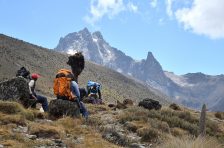
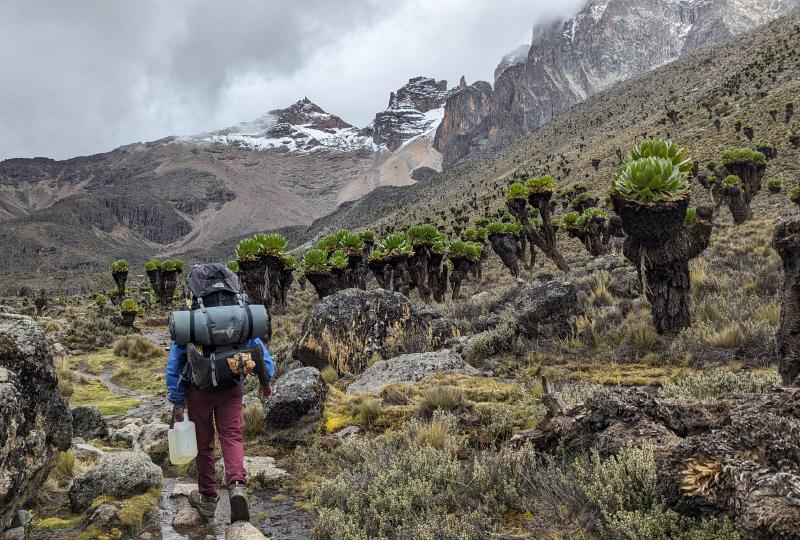
Rising impressively as Africa’s second-highest peak, Mt. Kenya is a UNESCO World Heritage Site whose dramatic landscapes offer a powerful blend of adventure and cultural heritage. Its rugged, glacier-clad summits and forested middle slopes create one of East Africa’s most awe-inspiring natural settings—ideal for high-altitude trekking, mountain retreats, and immersive outdoor trekking expeditions.
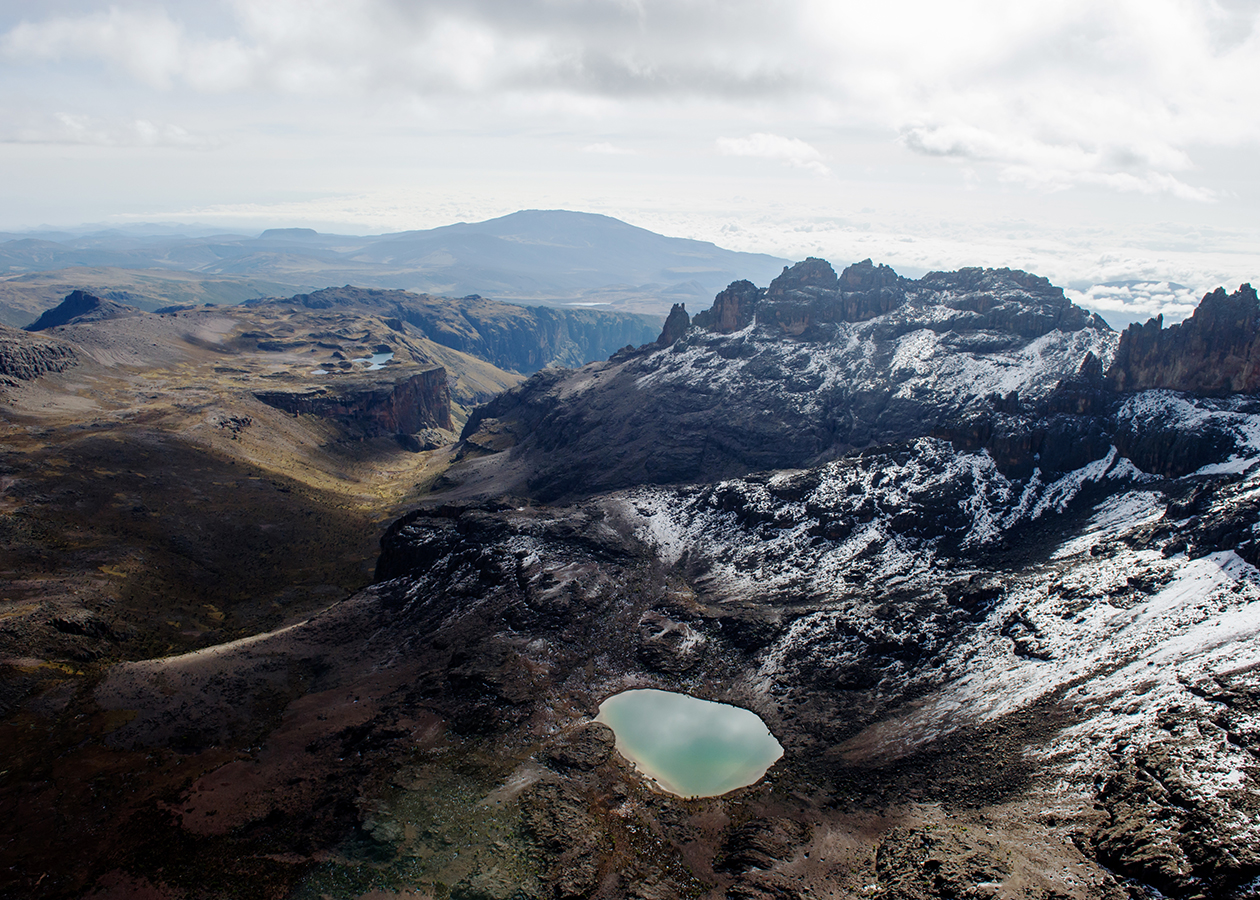
Scattered across the mountain are eye-catching high-altitude lakes and tarns that add to its scenic allure while offering rewarding opportunities for sport fishing, all which can be experienced on our Mount Kenya climbing tours including enriching visits to the nearby cultural communities for an interaction with the locals and Kenya’s natural legacy.
Trekking Mount Kenya summits represent far more than climbing goals — each peak tells its own story — from the non-technical trekking summit of Point Lenana to the vertical granite spires of Batian and Nelion, Mount Kenya offers both accessibility and challenge in a single mountain.
On most of our Mt Kenya climbing tours, many trekkers prefer traversing the mountain — ascending via one route and descending another to experience diverse mountain landscape ecosystems: Your adventure typically begins with a pickup from your accommodation, then we drive our way to the Mountain where you will start your trek – but before we start, you will do some documentation at the entrance gate.
At all times, you will be side by side with your mountain guide who will guide you safely up and down the mountain whereas as a general guide for a climb for two people over 5 days, a normal crew would comprise 1 x lead guide, 1 x assistant guide, 1 x cook and 3 to 5 x porters. If your climb is longer then the number of porters will increase as more food will need to be carried for everyone.
Climbing & Trekking Routes Of Mount Kenya
Most of our daily Mt Kenya trekking tours to Point Lenana follow the following routes, each offering a distinct blend of scenery, difficulty, and wilderness experience. If you want the highest chance of summiting the best route to climb Mount Kenya takes 5 or 7 days – offering excellent acclimatization and an easier summit night.
Burguret and Timau Routes: These are wilder, quieter routes for trekkers who want a more remote approach to Mount Kenya peaks. You need more planning and experienced guides. They are not the simple answer for someone asking how many days Mount Kenya takes to climb Mount Kenya.
Sirimon Route: Sirimon is usually the gentlest ascent profile. Our 4-day Sirimon-Chogoria trek enters at Sirimon Gate, climbs to Old Moses Camp at 3,300 m, continues to Shipton’s Camp at 4,200 m, summits Point Lenana and descends on the Chogoria side. This is a strong 4-day option for travelers with good fitness and limited time.
Chogoria Route: Chogoria is the scenic route on Mt Kenya. It gives you Nithi Falls, Lake Ellis, Lake Michaelson and the Gorges Valley. Our 5-day Chogoria-Sirimon climb spends a night around Lake Michaelson at 3,950 m before moving to Simba Tarn Camp at 4,600 m. That extra day is the difference between rushing through the beautiful side of the mountain and actually seeing it.
Naro Moru Route: Naro Moru is direct and historically popular but it is not the route we push for first-time Mount Kenya trekkers. It climbs fast and has a steeper feel. If you use it, treat 4 days as a minimum rather than trying to compress the mountain
Mount Kenya Hike Daily Schedule
This is what it looks like trekking Mount Kenya on a day-to-day viewpoint:
Usually for our camping team, the day begins well before sunrise. The team prepares hot water for you, tea, and other hot beverages and breakfast. A team member will bring you a basin of warm water to wash your face and brush your teeth, and a hot beverage, to warm you up before breakfast. We’ll dress-up ready for the day’s trek.
Breakfast is served in the mess tent, and we’ll all gather here for the day’s briefing, followed by a hearty breakfast, and daily medical checks. Take this opportunity to refill your water bottles or hydration reservoirs.
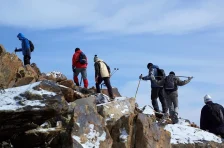
Once everyone’s marked fit and healthy, we’ll hit the trail, usually at around 8 am. Trekking poles in hand, we’ll be hiking at a slow-to-moderate pace, with plenty of rest stops for you to catch your breath, eat a snack, and appreciate the dramatic scenery of this unique mountain.
We’ll stop for lunch along the way, some days this will be a hot lunch served in a mess tent; on other days we’ll have a picnic lunch, depending on the weather conditions, route or schedule.
On arrival at camp, you’ll find your tent ready for you, and your duffel bag inside. It’s important to change out of any damp clothing, roll out your sleeping bag so it has a chance to “fluff up” , before heading over to the mess tent for a tea time snack and hot beverage.
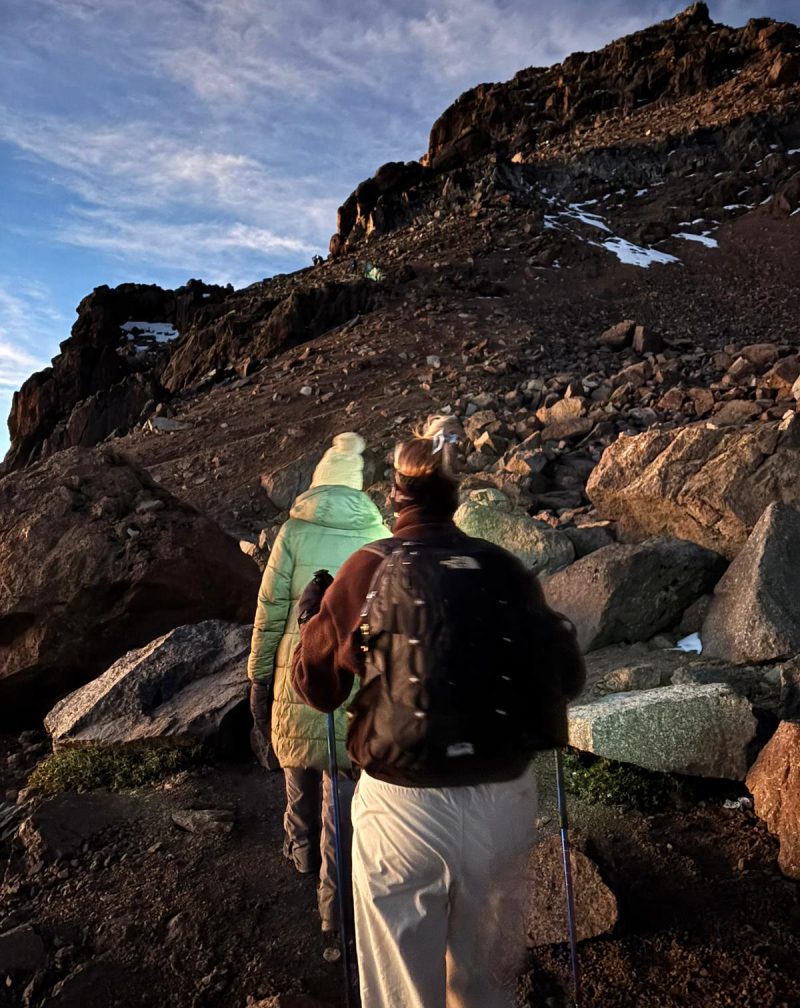
Some afternoons we’ll do an acclimatization hike, up to a higher elevation, as part of our “hike high, sleep low” protocol, others we’ll rest and relax in preparation for the following day. Summit attempts will be done between 3am and 4am. An early dinner will be served, after another medical check and briefing. Most trekkers crawl into their sleeping bag for an early night, others prefer to stay up talking. The tent is comfortable and well-lit, a good place to catch up on your diary or a bit of reading.
When Is The Best Time To Climb Mt Kenya
These are the best times to climbing Mount Kenya, month by Month.
The best Mount Kenya climbing periods are January to March with clear skies, the best climbing weather & minimal snow on rock routes, and from July to October which is the dry season with stable hiking conditions.
Less favorable climbing months are April to May when the long rains arrive making the climb slippery and difficult with leech-prone forest trails and the month of November which brings the short rains with unpredictable weather and mist.
How Fit Do I Need To Be For Mount Kenya Climb?
Although no mountaineering experience is required a good level of physical fitness is necessary to climb Mount Kenya. You must be comfortable walking 6-8 hours uphill a day. This is certainly a strenuous climb so the better prepared you are, the more you should enjoy it.
Plenty of time is available each day to get between the huts on the mountain so you do not need to rush and you are in fact far better off going slowly and enjoying the changing scenery and views. That way you acclimatize better and are in better shape for the final trek to Point Lenana and back. We recommend that in the months leading up to your climb you increase your physical fitness with aerobic exercise. Walking, running and stair-climbing will all strengthen your legs and improve your stamina.
Safety Tips Climbing Mount Kenya Peaks
Hydration is key in acclimatizing well, you should carry 2 liters of water with you each day with the aim of drinking all of this during your day’s hike. Drinking plenty of fluid at breakfast and evening meals is also important. You will understand why we suggest a “pee bottle” as a “must have” piece of kit to save you having to de-tent during the night and do a toilet visit when it’s cold and pitch black outside!
Fitness – be as physically fit as you can before you start to ensure you enjoy the climb rather than it being a hard slog. Also, the fitter you are the less likely you are to put your body under pressure and stress.
Make sure you have the right Mount Kenya gear and that you have tried and tested it before the trek to ensure that it works and functions and that you are as comfortable and confident as you can be. Don’t leave it till summit day to find out whether your head torch works or day one of the trek to try out your new walking boots.
Included In Your Mount Kenya Climbing Package
Included For Your Comfort When Climbing Mount Kenya
- Mandatory briefing before the trek
- Return transfers between the hotel to the start / finish point of a climb
- Certified, English-speaking licensed trekking guide for the full days on the mountain
- Experienced mountain chef, freshly prepared meals during the climb
- Porter services to carry both equipment and supplies with a limit of up to 10kg personal luggage
- All camping equipment, spacious mountain tents and sleeping mats
- Your tent is set up with your personal pack inside
- All meals throughout the trek, catering to all dietary requirements (vegetarian, vegan, gluten-free)
- Treated drinking water throughout the trek
- Mount Kenya National Park entrance fees for the full days
- Park camping fees within the national park
- Comprehensive first aid kit carried by the guide including emergency medication.
- Storage facilities for excess luggage during hikes
- All government taxes & levies
Mount Kenya Climbing Gears List
To successfully climb Mount Kenya you’ll need kit which keeps you warm, dry, protected from the sun/rain and comfortable in the various environments that you’ll find yourself in, below is a general summary of what you should be thinking about;
Climbing Bags – a medium-large rucksack for a porter to carry your kit on the mountain and a smaller pack for you to carry essential items during the trek. You can leave suitcases or other bags with travel clothes at our office safely.
Shell – Waterproof layer to keep off wind/rain. An umbrella can be very useful and gaiters over the boots
Warmth – Layers of clothing including base layer/Tshirt, fleece/shirt, warm jacket/top
Feet – Good quality trekking boots, sandals, trekking socks
Sleeping – Rent through us or come with a warm sleeping bag which is 3 or 4 season, plus a sleeping mat
Extremities – gloves, warm hat and sunhat
Miscellaneous – Trekking poles, water bottles, flask, favourite high-energy snacks, head torch, power pack, book etc
Personal Care – Suncream, anti-malarials, small 1st aid kit, wash kit
Getting Ready For Mount Kenya Climbing
This is the best way to prepare for climbing Mount Kenya Batian & Nelion peaks:
Physical Conditioning: Engage in a combination of trekking, climbing, and cardiovascular exercises. This will build endurance and help your body adapt to the exertion and altitude.
Altitude Acclimatization: Spend time at higher elevations prior to the climb to reduce the risk of altitude sickness.
Technical Skills: Practice scrambling and climbing on similar terrain to gain confidence and improve technique.
Gear Familiarity: Use the gear you plan to take on the climb during training to ensure comfort and efficiency.
Climbing Mount Kenya From Nairobi
For many visitors to Africa, climbing Mount Kenya experience is a once-in-a-lifetime challenge. The climb takes in muddy rainforests, unique high-altitude plants and alpine meadows before finally arriving at the glacier-coated summit. Standing tall above the savannahs of East Africa, Mt. Kenya (5,199m/17,060ft) is an icon of Africa. But just how do you go about these guided climbing Mount Kenya treks and how fit do you have to be? We answer some of these common questions as you book your Mount Kenya package today – journey with us to the roof of Kenya.
We have all Mount Kenya climbing Information that you need whether you’re looking for Mount Kenya facts, trek Mount Kenya as a group, or looking for the best Mt Kenya climbing itineraries, we have our expert team ready to assist you in whatever way. Get in touch today and find out about our daily Mount Kenya group hikes.